Censorship in Video Games, the Propaganda of the Digital Age
“When I graduated college, I got into the news business. In the newspaper business you get exposed to a lot of bullshit, and I noticed that it had been getting worse.” Professor Finn John regarding his inspiration for his class on Media Spin and Deception Detection. The first of its kind at the university pitched in 2011; there are now several others inspired by it and recent events.
Blizzard’s Blunder
This new wave of media meta-analysis is in response to a new threat to modern society. A threat Orwellian in nature that may have already begun to swallow us whole. Imagine for a moment that you’re a professional athlete. You spend all your days training and sacrificing to become the best. In fact, you are the best; you’ve just won the championship and now comes the post-game interview. All your life has led up to this moment and you want to make the most of it. During the interview you make an ending remark, expressing solidarity with an ongoing revolution. Big mistake. Turns out some of the sponsors of that event don’t support the revolution. As a result, you’ve been banned from tournaments and your prize money has been taken; your careers future is now in question. All for a few words of solidarity. This is not just some hypothetical. Blitzchung, a Hong Kong native professional esport player, has been banned from competition after expressing his support of the protests in Hong Kong during an interview after his win at the 2019 Hearthstone Asia-Pacific Grandmasters Tournament. You see Tencent, the Chinese tech conglomerate, owns a 5% investment in Blizzard and is speculated to be the influencing factor. Blizzard however has taken the stance that the decision was impartial as Blitz broke his contract by speaking on political matters at a live event. Not only have his winnings been docked but the interviewers alongside him were let go just for good measure. This is just one of many expressions of a worrying trend that is threatening new media and our collective freedom of expression, self-censorship and historical distortion.
However, censorship is not inherently bad. Finn, the professor who ironically pioneered the classes which studied censorship and media spin, suggests that censorship, “is like salt, you can’t cook without it. But too much of it can be a problem, see the cancel culture we got going on that Barack Obama was talking about.” This highlights the valid desire to control the narrative, something previously thought only applied to the political world but has now diffused into the general public. We’ve seen it happen to not only Blitzchung, but entire communities.
Riot at Riot Games
Shortly after Blizzard Entertainment came under fire for its handling of the situation regarding the tournament, another game developer by the name of Riot Games received backlash for an incident similar in nature. You see, Riot Games have censored certain terms in their games various chats and forums. Not just swears and obscenities but entire ethnic minorities. Specifically, the word “Uyghur,” the name for the Muslim minority facing brutal persecution and borderline extermination in western Xinjian China. Many have attributed this to the fact that Riot Games is owned by Tencent since 2015, the same tech conglomerate that has 5% stake in Blizzards stock. Thus, we can assume that both instances of censorship have stemmed from the desire to remain desirable in the Chinese markets. These events seem to be an expression of what Nielsen and Krogh coined as spillover censorship. In their article published in the journal of Popular Music and Society, they state that the local legal moral and political climate can “spill over” into market shares of global operations and media conglomerates. In this specific context it means that Blizzard (an American company toting American values) and Riot Games (an American based game developer) may be tempted to turn its back on those values with great enough financial incentive. This is a violation of both Chinese and world citizens’ rights to freely trade information. The justifications of economic viability are insufficient when it is at the cost of moral responsibility. “Willfully abiding by unjust laws, albeit necessary to do business in China, should not trump moral actions that protect rights” (Dann, G., & Haddow, E. 2008). Thankfully the outrage was great enough that Riot overturned the ban on the word Uyghur though other terms like “genocide,” “Tiananmen,” and “great firewall” are still banned.
Back to Blizzard
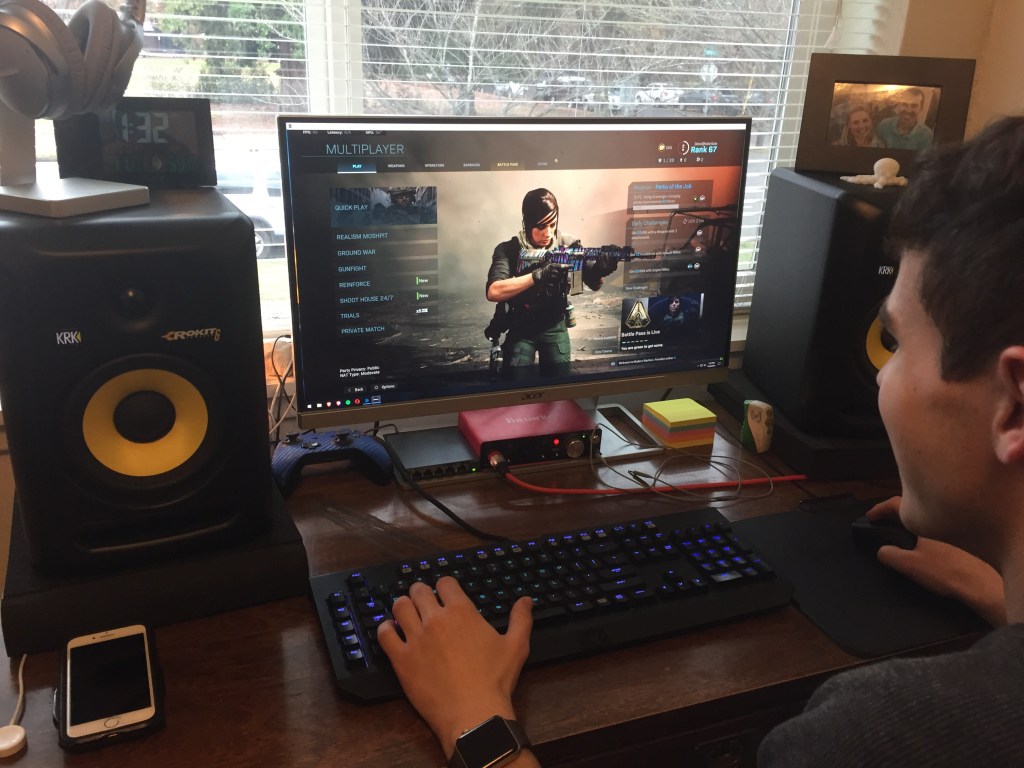
Let’s not focus on China too much however because the U.S. may be just as guilty in an equally insidious way. Look at the newest installment of the Call of Duty franchise, Modern Warfare (2019). Call of Duty has a long history with the U.S. military, and some may even consider it propaganda, damn fun propaganda. But the newest game has found itself in especially hot water after a few tasteless decisions with the apparent war crimes depicted in the game’s campaign. The story goes that the “highway of death,” a real-life war crime, was used as a backdrop for one of the levels. However, unlike reality where the attack was committed by U.S. and British forces, the game pins it in typical Call of Duty fashion on the Russians. It’s okay to use real world tragedies as inspiration for entertainment, but a line must be drawn with how you present them. Rewriting the perpetrator as the hero is in especially bad taste, so bad in fact that Modern Warfare 2019 is banned in Russia. Tensions are already strenuous with Russia; we need to be careful as to not give them more reason to be weary of us.
It is apparent that there is an epidemic of careless censorship and distortionary tactics being employed by game developers. This raises the question of accountability. Can they even be held accountable, and if so how? Is merely abstaining from the content enough? Professor John sheds lighter on this conundrum.
The Consumer Conflict
“Most of the time major communication breakthroughs end up regulated by the government in some way. In terms of fighting back (as a consumer) you can switch horses. But it’s almost like, are you gonna have an android phone and Google’s gonna spy on you, or will you have an iPhone so you will have a little less spying but you know some of it is still going on anyway. It’s a somewhat disempowering space. I’m optimistic long term, but I’m not sure there’s much we can do in the short term to individually make a difference. The other thing is if a company makes a clear statement, that lets say it prioritizes Chinese market interests over its fanbase, then you’re going to want to act accordingly and people will.” Finn’s sentiment seems optimistic, that we should wait it out in the long term. Vote with our wallet, that sort of thing. But we can still do more. Educate each other and always view your media through a critical eye. Speaking up is the best course of action. Silence is compliance and an endorsement to the status quo, which by the looks of it is headed in a dystopian direction. In the marketplace of ideas, the consumer is still king. Every purchase is an affirmation of the purveyor’s actions.
This issue of boycott is a bit more nuanced, however. Many people can separate art from the artist and enjoy something despite its dubious affiliations. Often controversial narratives come about as a result of coincidence or accident. Bryce Han, a close friend and former roommate of mine is an avid gamer and loves the Call of Duty series. When asked about his opinion of the Modern Warfare controversy he mentioned that it didn’t tamper with his experience of the game. From his perspective the game delivered on all the fronts he expected it too. The gameplay was fun, fluid, and gorgeous to look at. The narrative implications of which he did not consider. He further went on state that he is confident that the controversy is a coincidental byproduct of the Call of Duty “formula” where Russia is traditionally an antagonizing force. He concluded that, being a game about war, Call of Duty will inherently offend someone. By that logic if the game is so offensive as to turn most of its consumer base against it, then the producers will likely take notice and learn from their mistakes. This sentiment is shared by the protests outside of Blizzcon following their own controversy. He also insisted that it is their creative right to make potentially offensive content, as the consumer base will ultimately decide its success. If Activision/Blizzard hope to reach as wide an audience as possible, maybe next time they will take a bit more care when depicting its real-world events as to not ostracize a global superpower.
This is quite an empowering statement for a consumer. Ultimately what we tolerate in the media is up to us. However, the consumer is only as powerful as they are educated. Another Oregon State professor by the name of Carmen Tiffany contextualizes this well. It is her opinion that this awareness, or, “Media literacy, is humanities greatest defense in relation to misinformation. That (misinformation) is a tough one at the moment because there are so many new modes of communication in a very short amount of time. All of these new ways of communicating through social networks are very new to much of the world population and will take time to for media literacy to spread. Hopefully it does sooner than later!“ If some content or media makes you feel uncomfortable or seems dubious in intent, the best course of action is to speak out and educate others. There are likely communities out there that share your sentiment and need loud voices. Sometimes you must take a stand for the world you wish to see, even if that means missing out on your favorite video game or that new virtual cosmetic item. In the wise words of Blitzchung, “Today I lost Hearthstone, it’s only a matter of four years. But if Hong Kong lost, it’s a matter of a lifetime.” Finn could not stress it enough that media “is like an arms race.” Meaning that rhetorical tricks form the 70’s would be laughed off today. Every time the media tries to dupe or deceive its patrons, eventually the well-educated wizen up.
Sources:
Dann, G., & Haddow, E. (2008). Just Doing Business or Doing Just Business: Google, Microsoft, Yahoo! and the Business of Censoring China’s Internet. Journal of Business Ethics, 79(3), 219–234. https://doi.org/10.1007/s10551-007-9373-9
Nielsen, S. K., & Krogh, M. (2017). Spillover Censorship: The Globalization of US Corporate Music Self-Censorship. Popular Music and Society, 40(3), 345–362. https://doi.org/10.1080/03007766.2017.1300760
Follow My Blog
Get new content delivered directly to your inbox.
 Dean's Brain Blast Blog